

AI agents are not the hard part. Keeping them useful in six months is.
Everyone is buying AI that can run. We build AI that can rebuild itself.
Scroll Down
to discover more

Built for:


What we do.
What goes wrong
Most AI systems are assembled in tools that cannot be edited by AI. A workflow canvas, a set of triggers, a chain of steps. It runs on the day it is installed. Then your process changes, and a person has to go rebuild it by hand.
What we build instead
We build the whole system in code, so an AI can read it, extend it and keep it current. The system you buy in January is a better system in June, without a rebuild and without paying for it twice. That gap compounds every month.
What we have done.
+
0
Completed projects
+
0
Years of experience

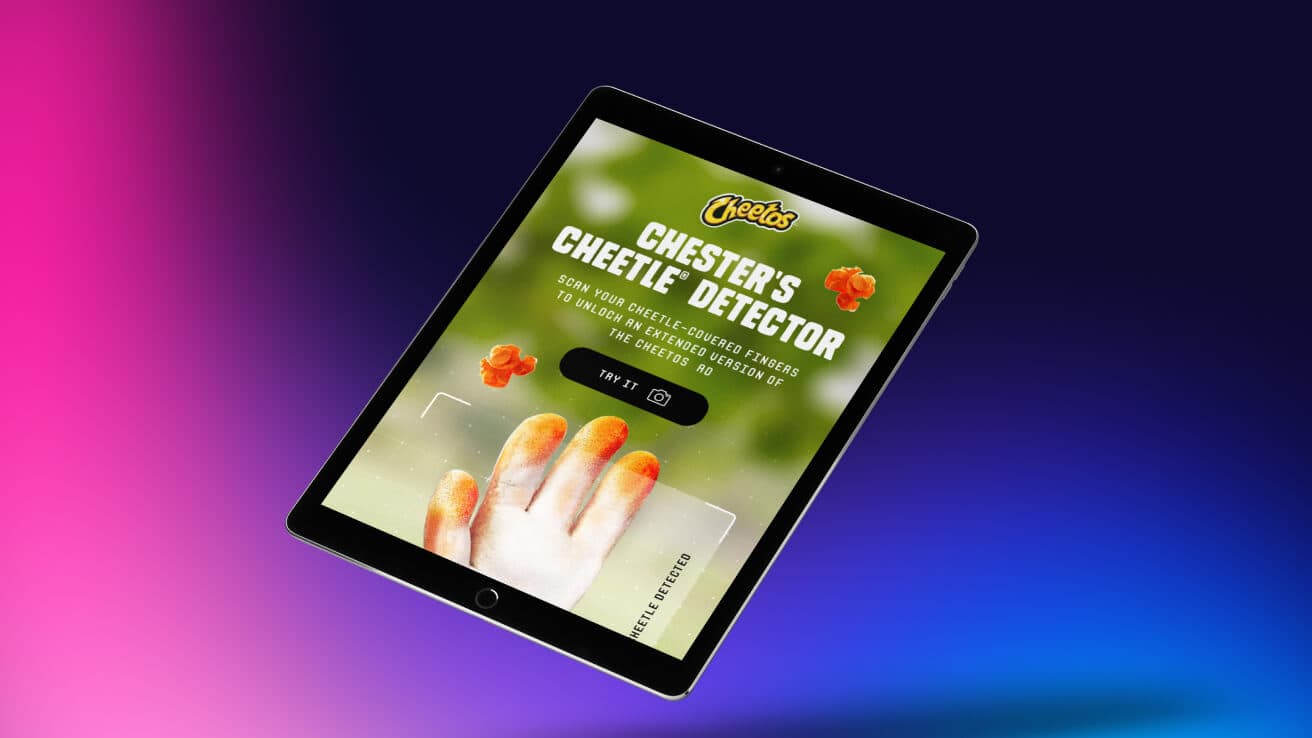
Cheetle Detector
A web experience that could tell whether you had just eaten Cheetos, by recognising the orange dust on your fingers in the browser. Built with Frito-Lay, Chester the Cheetah and Bad Bunny to unlock an exclusive adidas drop.
Start a conversation


Disney Music - Sounds of Summer
A gifting experience for Disney Music Group. Pick an occasion, pick a playlist, write a note, and send a piece of Disney straight to someone's inbox.
Start a conversation
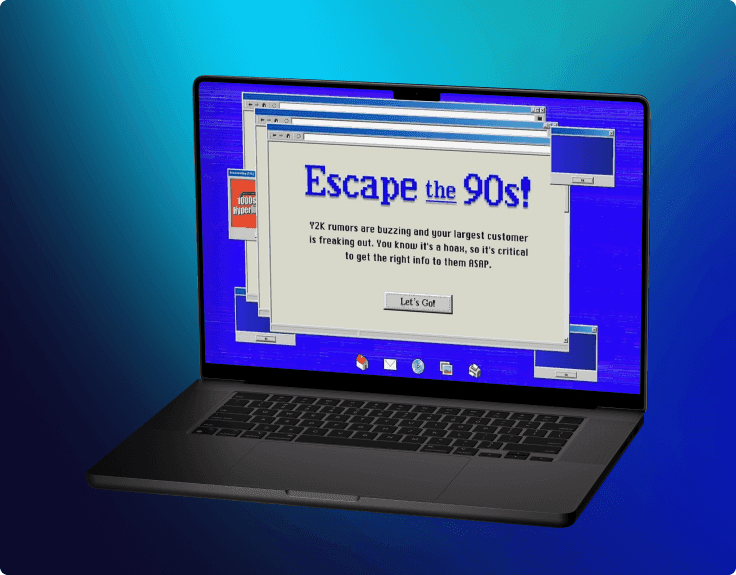
Yext Back To The 90s
A campaign site for Yext built as a Windows 95 desktop, with an interactive quiz about obsolete technology. The punchline lands at the end: your search stack is probably just as old.
Start a conversation

Tishman Speyer
A rebuilt homepage for one of the largest real estate firms in the world, with multi-language support so its international clients read it in their own language.
Start a conversation
How we do it.
One workflow at a time, from the process you run today to a system your team owns.
Step 1
Find the repeated thinking
Before anything is built we map where your people spend the week reading, scoring and drafting the same things. That map is the scope, and it is what gets priced.
 Walk the process as it actually runs today.
- Name the decisions a person makes by hand every week.
- Agree what a finished result looks like.

Step 2
Build the smallest system that does it
One workflow, end to end, in code. Not a prototype and not a demo. Something your team can use on Monday.
- One workflow first, chosen for impact.
- Wired into the tools you already run.
- In your repository from day one.
Step 3
Ship weekly, in the open
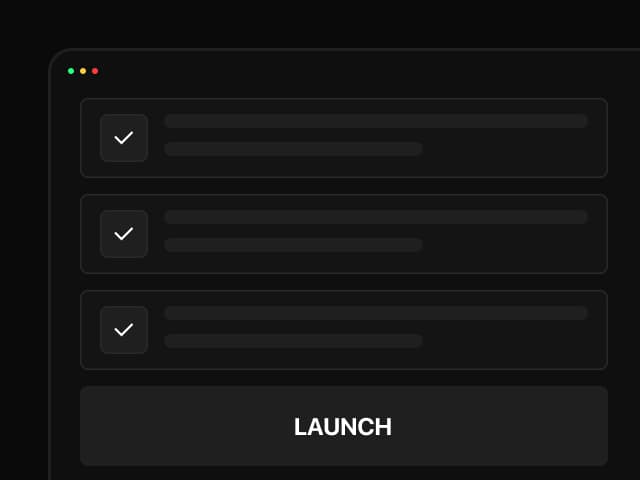
Every week there is working software to look at. You steer what goes in next, and you can see the reasoning behind every decision the system makes.
- Weekly working software, not status decks.
- You prioritise what goes in next.
- Every automated decision is inspectable.
Step 4
Hand over something that keeps improving
You get the repository, the documentation and the deploy pipeline. Written so an AI can read it and extend it, which means the system does not freeze the day we stop working on it.
- The code, the docs and the pipeline are yours.
- Structured so your own AI can extend it.
- Support while your team takes the wheel.
Step 1
Find the repeated thinking
Before anything is built we map where your people spend the week reading, scoring and drafting the same things. That map is the scope, and it is what gets priced.
- Walk the process as it actually runs today.
- Name the decisions a person makes by hand every week.
- Agree what a finished result looks like.
How we work
together.
Two shapes. You always know which one you are in.
Project or retainer
A fixed-scope project, priced against a defined result and agreed before anything begins. Or a weekly retainer, when the work is ongoing and priorities move. Most first projects run four to eight weeks.
Start a conversation
What you get
- A defined result, priced before anything starts
- You work with the people building your product
- No account manager and no handoff to a team you have not met
- Everything written in code you own, not a workflow canvas
- Weekly working software, not weekly status updates
- The repo, the docs and the deploy pipeline are yours
- Extendable by your own AI after we hand over
- Either side can stop after any week
Built for:
What is different.
Four things that are true here and are not true of a workflow tool, or of the last agency you hired.
Written in code, not in a canvas
Your AI can read it, extend it and keep it current after we are gone

Week by week, with no lock-in

Working software every week

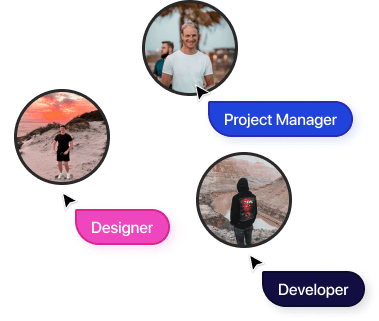
The senior people who scope your project are the ones who build it
Why not just buy an AI automation tool?

Because a workflow tool is a photograph of your process on the day you set it up. It runs, but it cannot change itself. When your process moves, someone has to go back into the canvas and rebuild it by hand. A system written in code can be read and extended by AI, which means it keeps getting better instead of slowly drifting out of date.
Why not hire someone in-house?
Sometimes you should, and if that is the right answer we will say so. Hiring makes sense when the work is continuous and central to what you sell. We make more sense when you need a working system in weeks rather than a hiring process in months, and when you want it built by someone who has shipped this before.
Do you work in our repository?
Yes, or we create one for you and hand it over. Either way the code, the documentation and the deploy pipeline end up owned by you. Nothing important lives in an account you cannot reach.
What happens after handover?
The system is written so your team, and your own AI tooling, can keep extending it. That is the point of building it in code. We stay available for support, but you are never stuck waiting on us to change a step in your own process.
How do you price it?
Against a defined result, agreed before anything starts. Fixed-scope projects are priced as a project. Ongoing work is a weekly retainer where you set the priorities each week. No hourly billing and no surprises at the end.
What if the problem is not really a software problem?
Then we will tell you. If the process itself is broken, automating it just makes the wrong thing happen faster. That conversation costs one uncomfortable sentence and saves a quarter.
Got an itch to get going?
